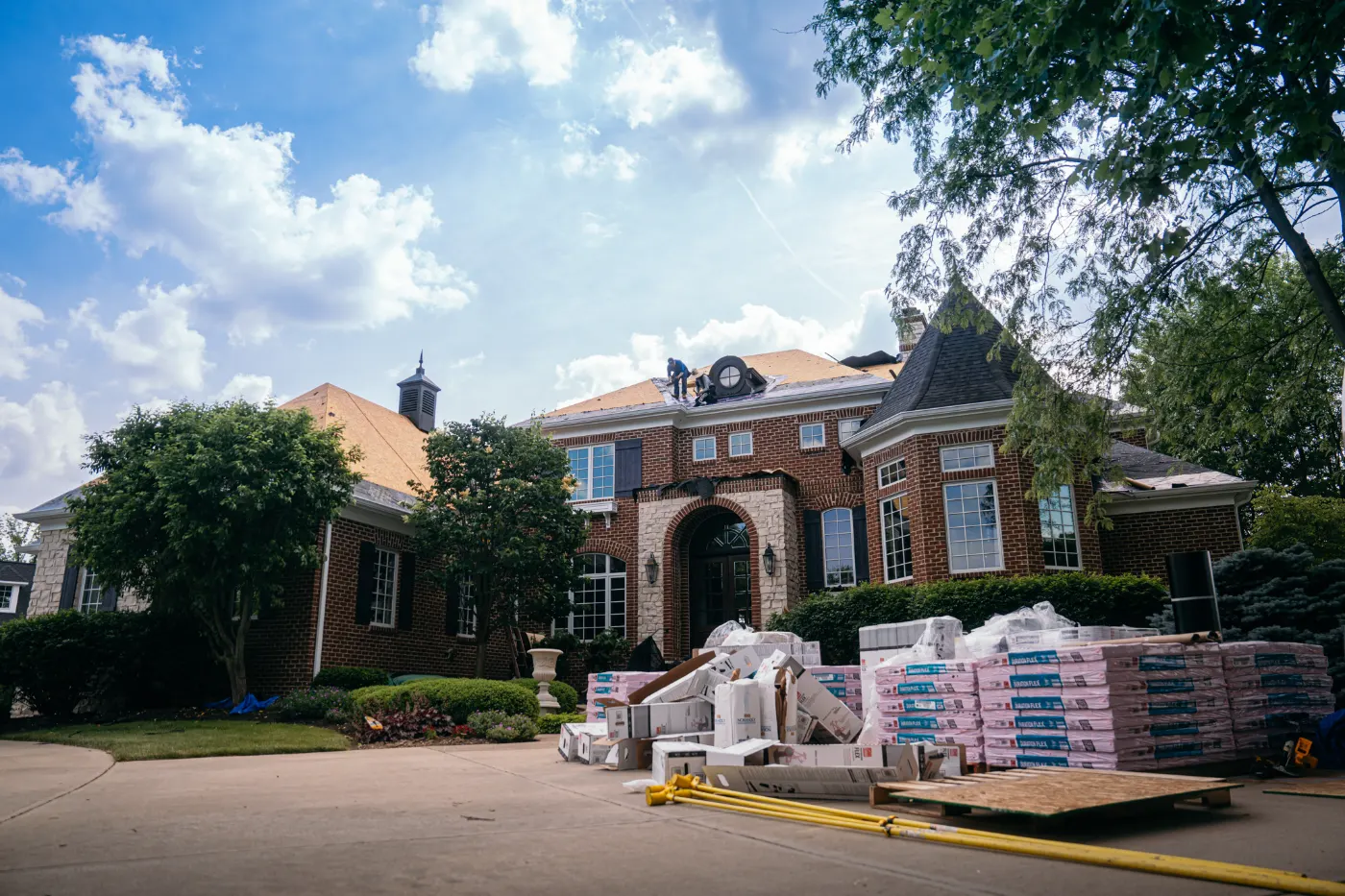
Storm Damage Roof Repair in Timber Bend, IN
Timber Bend Roofing provides roof inspections, repairs, and replacements for homeowners in Timber Bend who need a straight answer about their roof. We're licensed and insured in Indiana, our inspections are free, and every estimate we hand you is written down in plain terms.
If we're busy helping someone else and miss your call, we'll call you back within 15 minutes.




Timber Bend Roofing serves Timber Bend and Hendricks County homeowners with roof inspections, roof repair, emergency roof repair, roof replacement, built to the nail patterns wind ratings require. Call (317) 342-7736.
- Services: roof inspections, roof repair, emergency roof repair, roof replacement
- Service area: Timber Bend, Hendricks County, IN and surrounding areas
- Response: Priority response for Timber Bend active leaks; photos and scope follow the same visit
- Licensed and insured (License #RC21100059)
- Serving Timber Bend, IN since 2018
Schedule Your Free Roof Inspection
A Timber Bend roof inspection with Timber Bend Roofing is a hands on walk of the whole roof, not a glance from the driveway. We check shingle condition for cracking, curling, bruising, and granule loss, and we look closely at flashing around chimneys, skylights, valleys, and pipe boots because those are where leaks usually start. We photograph problem areas so you can see what we see, and everything gets written down. Timber Bend has plenty of roofs pushing the far end of their service life, and small issues on aging shingles become expensive interior repairs if they sit through another storm season. A thorough inspection catches them while they're still cheap to fix.
I agree to be contacted by Timber Bend Roofing regarding my inquiry.
Nail pops telegraph through Timber Bend roofs one shingle at a time. A fastener backs out a quarter inch, tents the shingle above it, and opens a path that works wider with every freeze. From the ground it reads as a shadow. Up close it is a hole in progress. Hendricks County roofs at the decade mark usually carry a scatter of them, each a small fix now and a deck stain later.
Punch lists get closed before Timber Bend Roofing asks for final payment, walked in daylight with the Timber Bend homeowner and the checklist in hand. Every pipe boot seated, every ridge cap straight enough to sight down, every gutter cleared of our debris. The Hendricks County version of done that requires three callback visits is not done, and the company does not invoice for it.
Ice dams writing on your Timber Bend ceilings every February? Timber Bend Roofing fixes the cause, not just the symptom: attic insulation gaps found, ventilation balanced, membrane placed where IN winters actually attack. Call (317) 342-7736 before the next freeze cycle, and give your Hendricks County eaves a winter that finally passes without a mark.
Payment Options That Work for You
We partner with established lenders so Timber Bend Roofing clients can spread the cost of a major roofing project into manageable payments. Ask your project lead about current options.
Pay for your project at a later time, but lock in today's pricing. Ideal for homeowners waiting on insurance settlements.
- No payments for 12 months
- No interest if paid in full
- Lock in current pricing today
Divide your project cost equally across 12 months with zero interest. Most homeowners choose this option for predictable budgeting.
- Equal monthly payments
- 0% interest for 12 months
- Simple, predictable budgeting
Spread your investment over up to 20 years with fixed equal payments. The right choice for larger projects or homeowners who prefer lower monthly amounts.
- Up to 20-year terms available
- Fixed equal payments
- Ideal for larger projects
Financing provided by Slice, Foundation Finance, Regions. Subject to credit approval. Rates, terms, and promotional periods are set by the lender and disclosed in writing before you sign.
What Timber Bend Homeowners Call Us For
Whether the job is an inspection, a repair, or a complete replacement, Timber Bend Roofing sends manufacturer-certified crews and documents the work clearly.
Roof Inspections in Timber Bend
Free on site roof inspections for Timber Bend homeowners, covering shingles, flashing, valleys, and signs of storm or age damage. You get photos and a plain summary of what we found.
Learn moreRoof Repair in Timber Bend
Targeted roof repair for Timber Bend homes, from replacing damaged shingles and resealing flashing to fixing leaks and problem penetrations. Scope and price are written down before any work begins.
Learn moreEmergency Roof Repair in Timber Bend
Emergency roof repair for Timber Bend homes after storms, fallen limbs, or sudden leaks. We prioritize active damage to stop it from getting worse while a full repair or replacement plan is put together.
Learn moreRoof Replacement in Timber Bend
Full roof replacement for Timber Bend homes, including tear off, underlayment, flashing, and shingle installation to manufacturer spec. Written scope, clean job site, and a final walkthrough at completion.
Learn moreDesigner Roofing in Timber Bend
Designer roofing for Timber Bend homeowners who want an upgraded look, whether that's premium architectural profiles, distinctive colors, or specialty shingles. We match the choice to the home's style and your HOA requirements.
Learn more
Local Expertise, Real Results
Nails go in where the manufacturer says, in the nailing zone, at the count the wind rating requires.
Class 4 impact-rated shingles exist because hail keeps winning. Timber Bend Roofing quotes them alongside standard architectural lines for Timber Bend homes, with honest talk about cost, insurance discounts, and what the rating does and does not cover.
Timber Bend Roofing serves Timber Bend, the rest of Hendricks County, and the surrounding communities of Avon, Plainfield, Brownsburg, Danville, and the west side of Indianapolis. Founder Aaron Christy started the company in 2018 after years in the trade, and his work has been featured on FOX59, WISH TV, and RTV6. Our crews are local to central Indiana, licensed and insured, and carry Indiana license RC21100059. When we're on a Timber Bend roof, you're dealing with people who know Hendricks County housing stock and how these roofs actually age out here. That familiarity shows up in the small details we catch during an inspection.
The way we work in Timber Bend is simple. A crew member climbs the roof, walks the planes and valleys, and photographs shingles, flashing, penetrations, and any spots that look like storm or age damage. You get those photos along with a written estimate that spells out the scope, the materials, and the price, so nothing shows up later as a surprise line item. When the work starts, we protect landscaping, keep the site tidy, and clean up nails and debris before we leave. No inflated claims, no invented certifications, just careful roofing work you can point at.
Our Promise
Every Timber Bend homeowner who calls Timber Bend Roofing gets a free on site inspection before we ever talk about work. If repair or replacement makes sense, you get an honest written estimate with the scope spelled out, no mystery add ons buried at the bottom. The finished roof is backed by a workmanship warranty from us and the standard manufacturer coverage that comes with the shingles we install. That's the deal, and it doesn't change once the contract is signed.
Four Reasons Timber Bend Owners Pick Us
Homeowners across Timber Bend and Hendricks County get thorough inspections, good materials, and prices we're upfront about.
Storm And Hail Response
After hail or high wind rolls through Hendricks County, we prioritize inspections for homeowners with fresh damage. We look for bruised shingles, lifted tabs, torn flashing, and displaced granules, and we document every finding with photos. That way you have a clear record of what the storm did before any repair discussion begins.
Familiar With Timber Bend Homes
Timber Bend homes were built in an era that leaves many original roofs at or past their expected service life. We know the pitches, the multiple planes and valleys, and the way mature tree cover accelerates wear. That context helps us give Timber Bend homeowners a realistic read on whether it's still a repair job or a full replacement conversation.
Full Scope Roofing
We handle the whole arc, inspection, repair, emergency repair, replacement, and designer roofing. You don't have to line up different companies for different phases of the job. One crew looks at your roof, one estimate spells out the work, and the same team is on the roof through completion.
Insurance Documentation Done Right
When a Timber Bend roof has legitimate storm damage, the claim depends on clear evidence. We photograph the damage, note dates and conditions, and prepare a written scope you can hand your carrier and adjuster. That documentation keeps the conversation about facts, not opinions.
Real Jobs. Real Results.
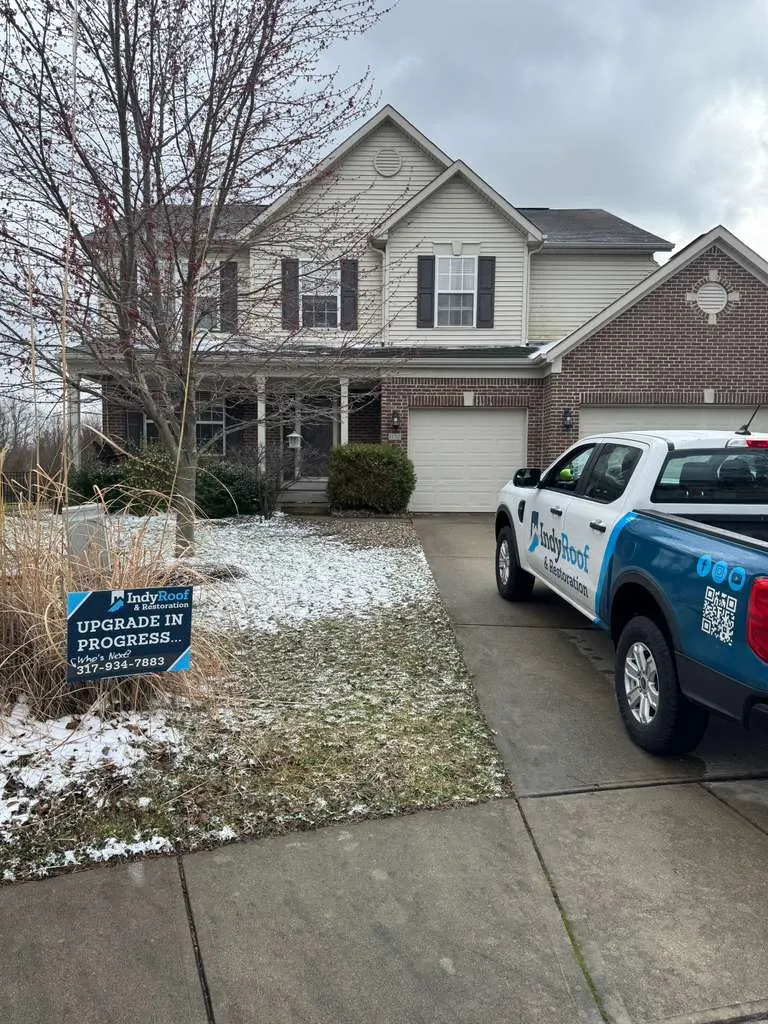
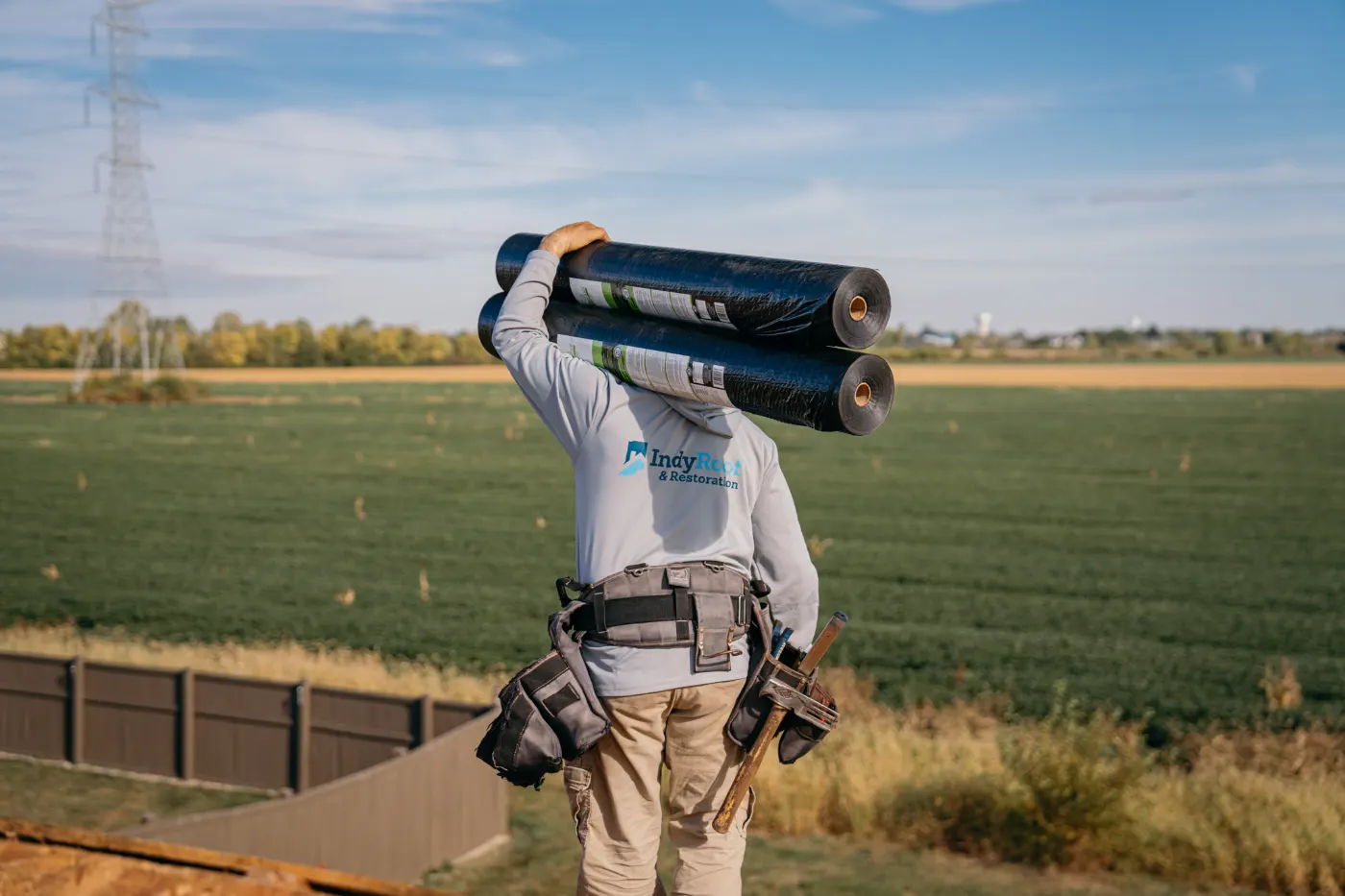
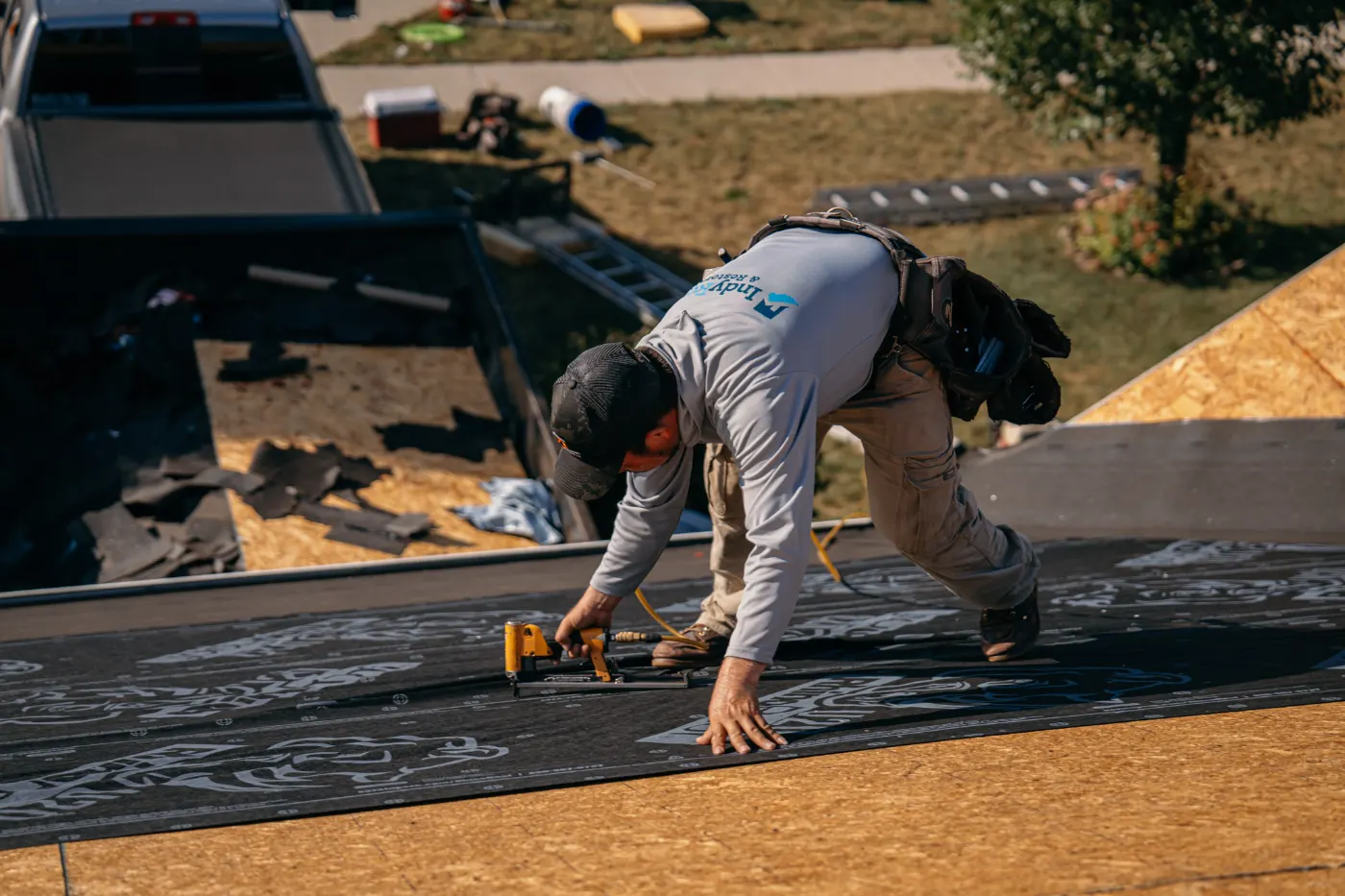
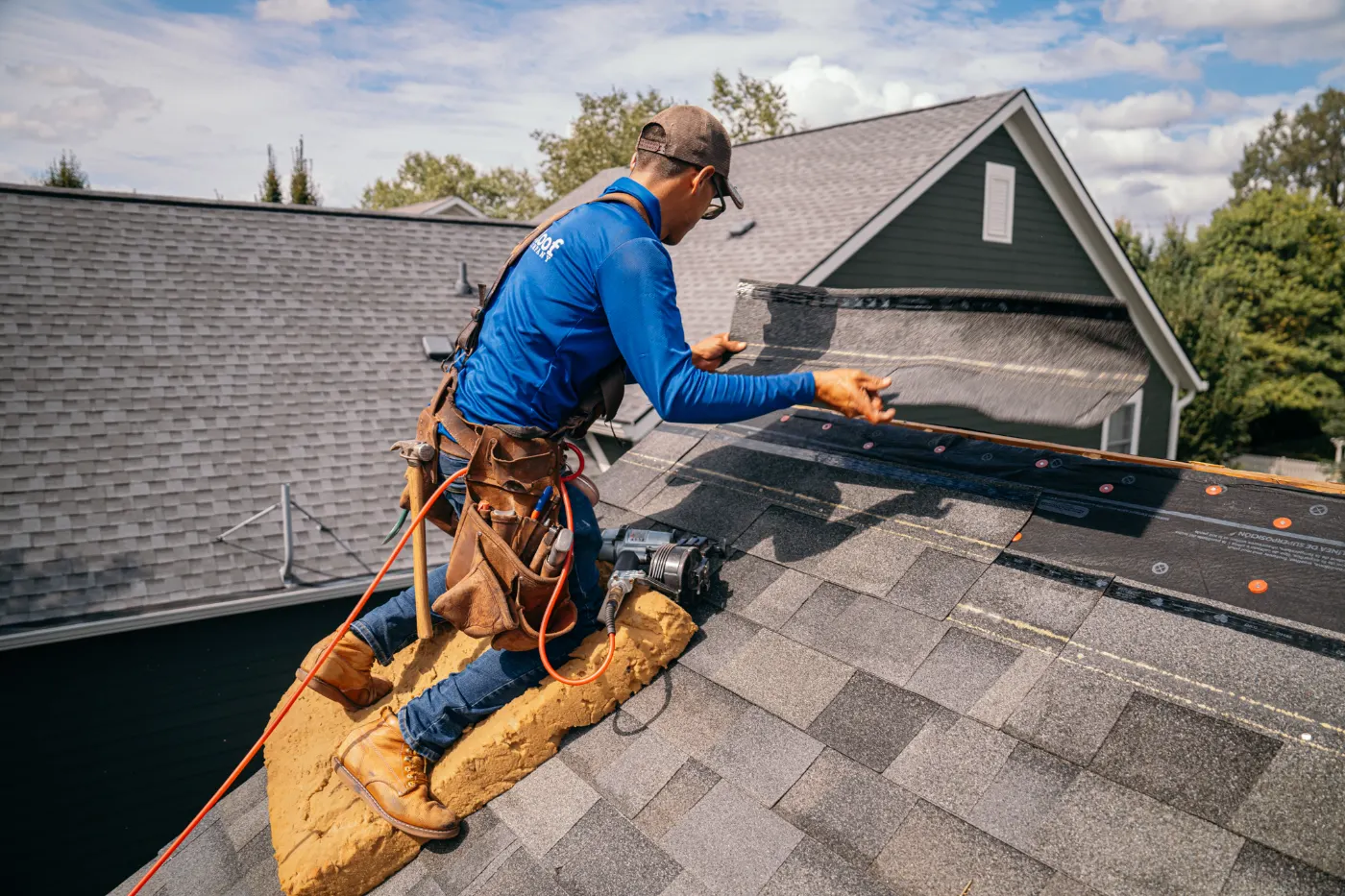
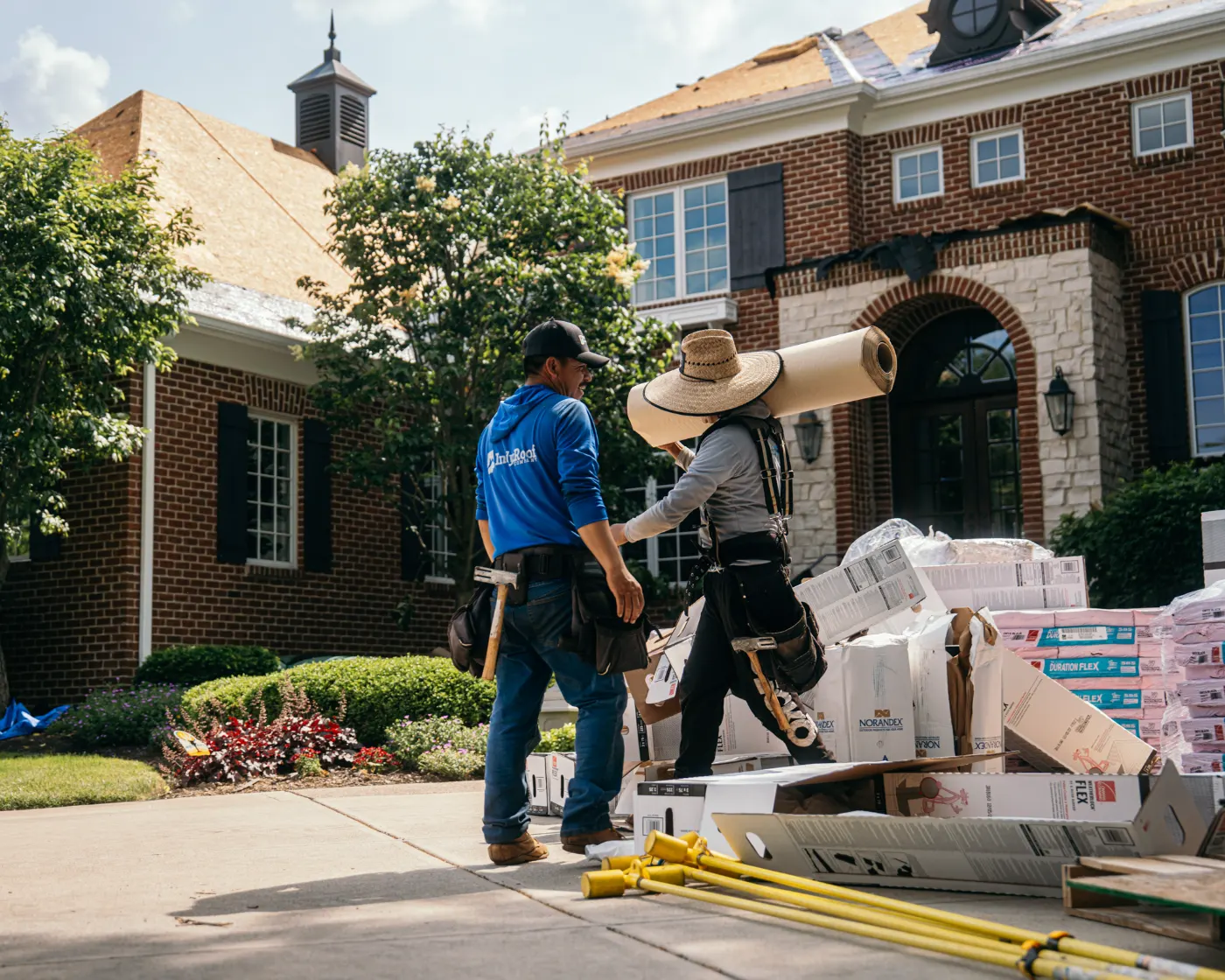
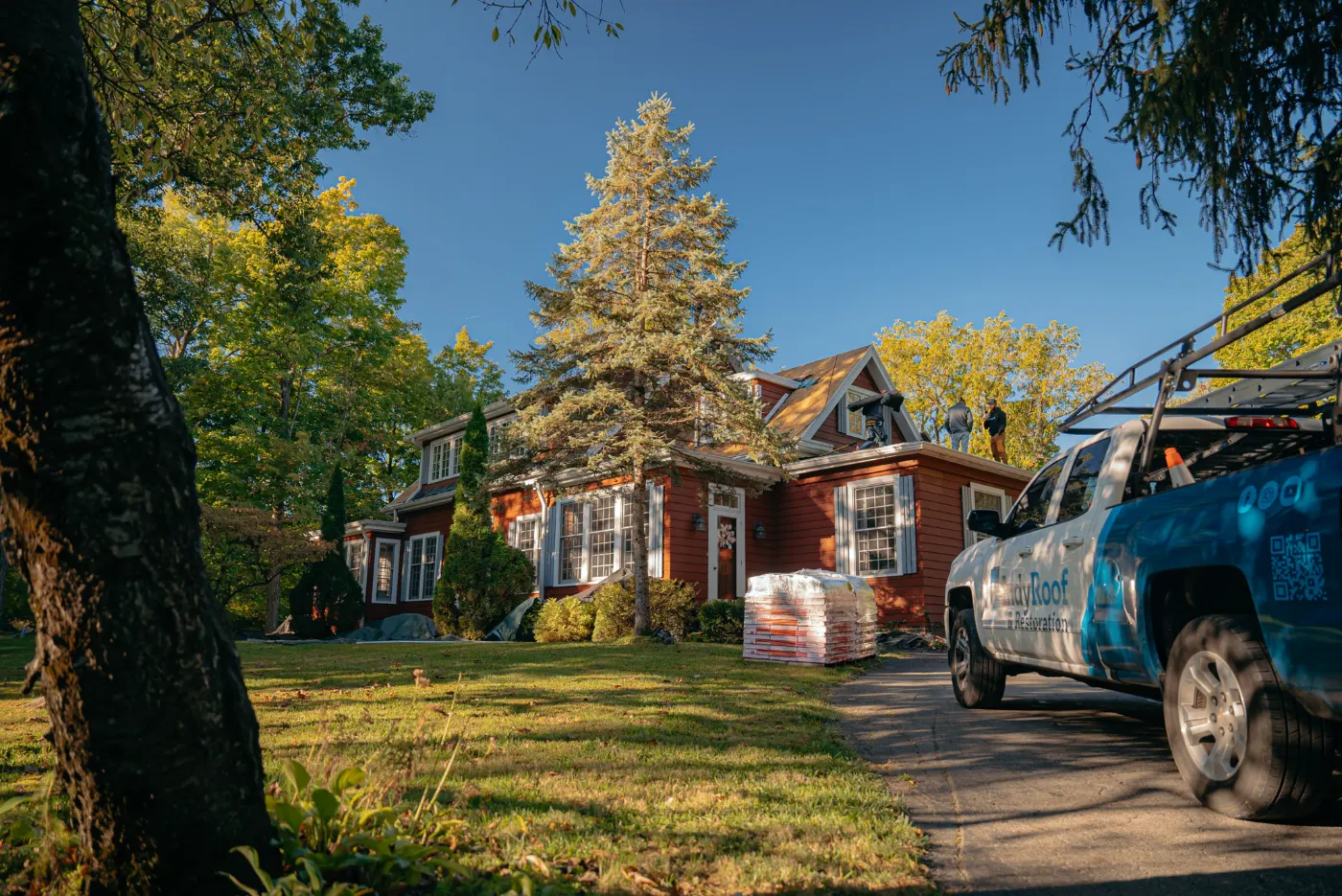
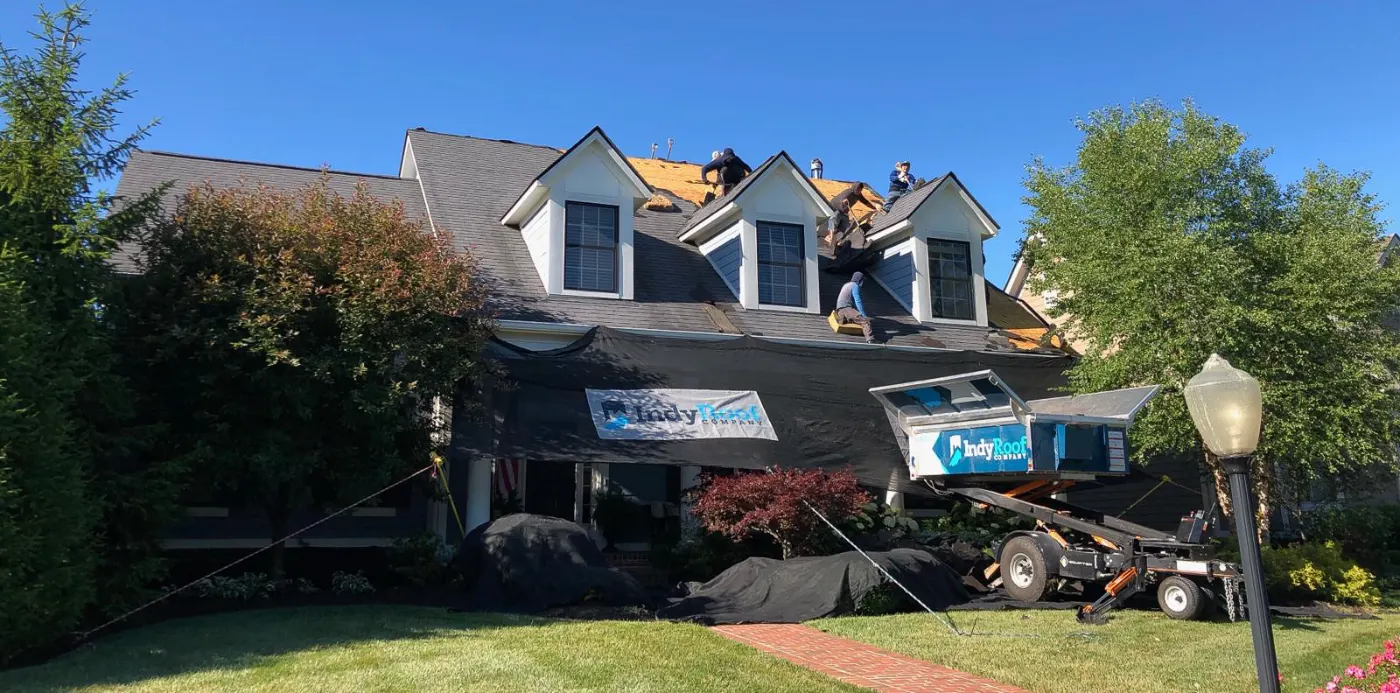
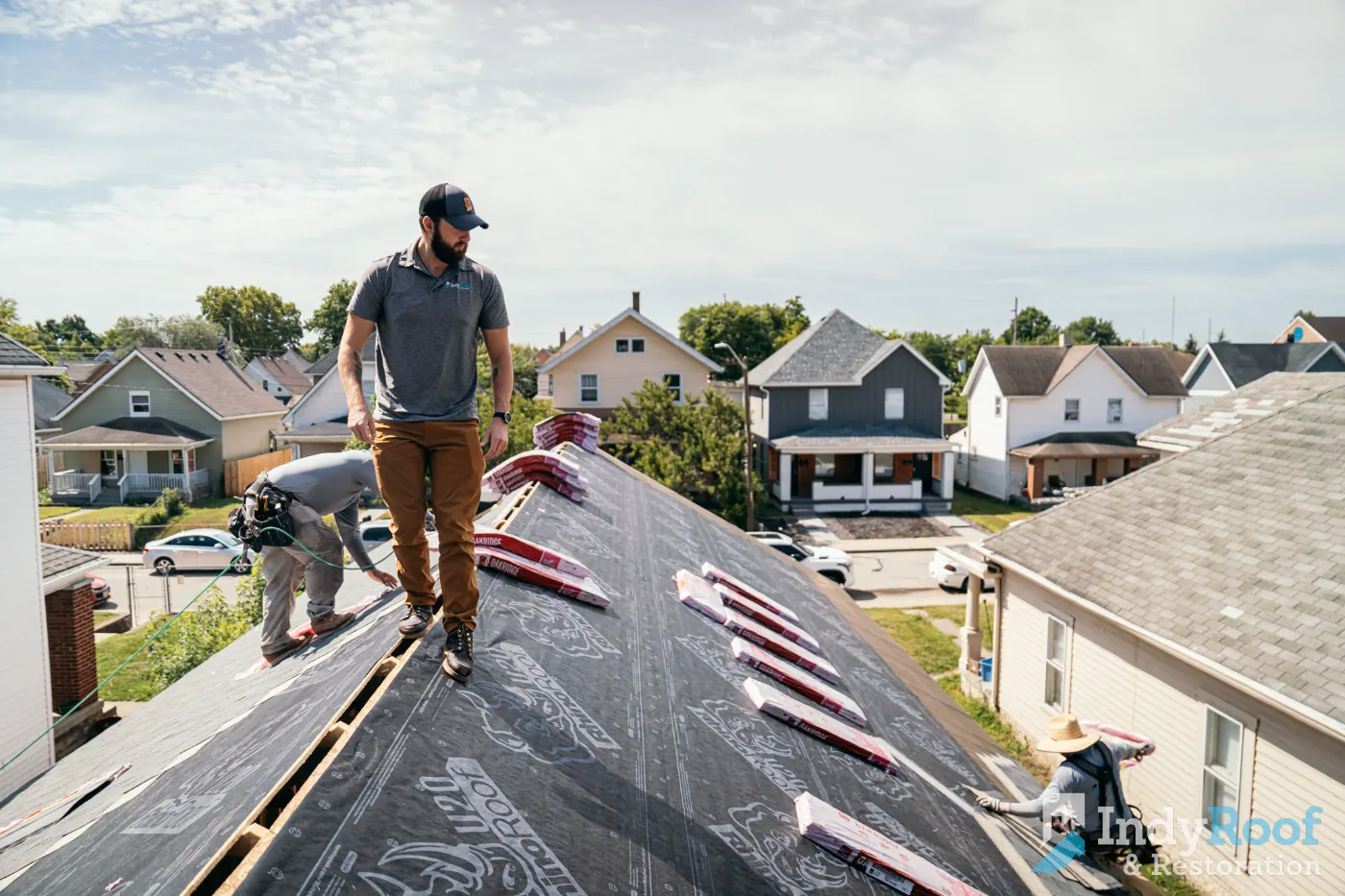
Photos from recent roofing projects completed by our manufacturer-certified crew across Timber Bend and Hendricks County. Every project is documented with photos and a written closeout package.

Step by Step Through Your Timber Bend Reroof
The first step in Timber Bend is the inspection and assessment. We come out, walk the roof, and look at shingles, flashing, valleys, penetrations, and anywhere water tends to find its way in. Photos go into a file for your address so you can see the condition of every plane, not just take our word for it. If there's storm or age damage, we point to exactly where it is and explain what's driving it. Before we quote any work, you get a clear picture of what the roof actually needs.
Next comes the estimate and, if applicable, the insurance step. You'll get a written estimate that lists the scope, materials, and price in plain language so you can compare it fairly. If the damage looks storm related, we help document the loss and provide the photos and scope you can share with your insurance carrier and adjuster. We don't works with your insurance carrier and we don't name drop policies we can't see, but we make sure a Timber Bend homeowner is walking into that conversation with organized evidence rather than guesswork.
The last step is the work itself and a clean completion. We schedule the job around weather and your calendar, protect landscaping and driveways, and keep the site as tidy as roofing work allows. Our crew tears off, installs underlayment, flashing, and shingles to spec, and cleans up nails and debris before leaving. At the end, we walk the property with you and go over what was done. Timber Bend homeowners get a finished roof, the paperwork, and a workmanship warranty they can actually point to.
Free Inspection With Photos
We climb the roof, check the full system, and photograph what we find. You get to see the shingles, flashing, and problem spots for yourself. No pressure to book work off the inspection.
Honest Written Estimate
Every Timber Bend estimate is written, itemized, and explained in plain language. Scope, materials, and price are all on the page. If something changes mid job, you hear about it before it costs you anything.
Insurance Documentation
For storm damage, we prepare photos, notes, and a written scope you can share with your insurance carrier and adjuster. We don't works with your insurance carrier and we don't speak for your policy. We give you the evidence to make the claim conversation straightforward.
Clean Work, Final Walkthrough
When the roof is done, we clean up nails, haul off debris, and walk the property with you. You see the finished work up close and get your paperwork in hand. Anything that needs a touch up gets handled before we call it complete.
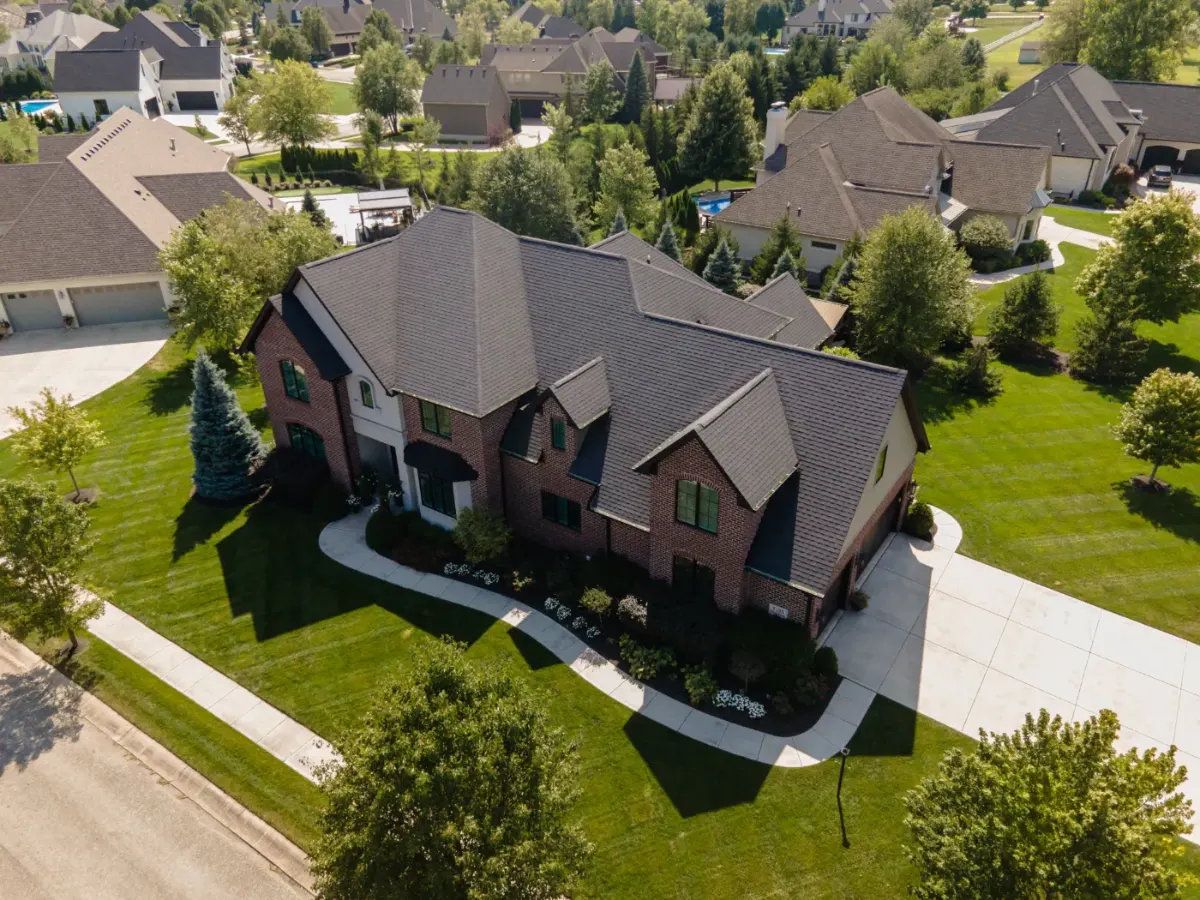
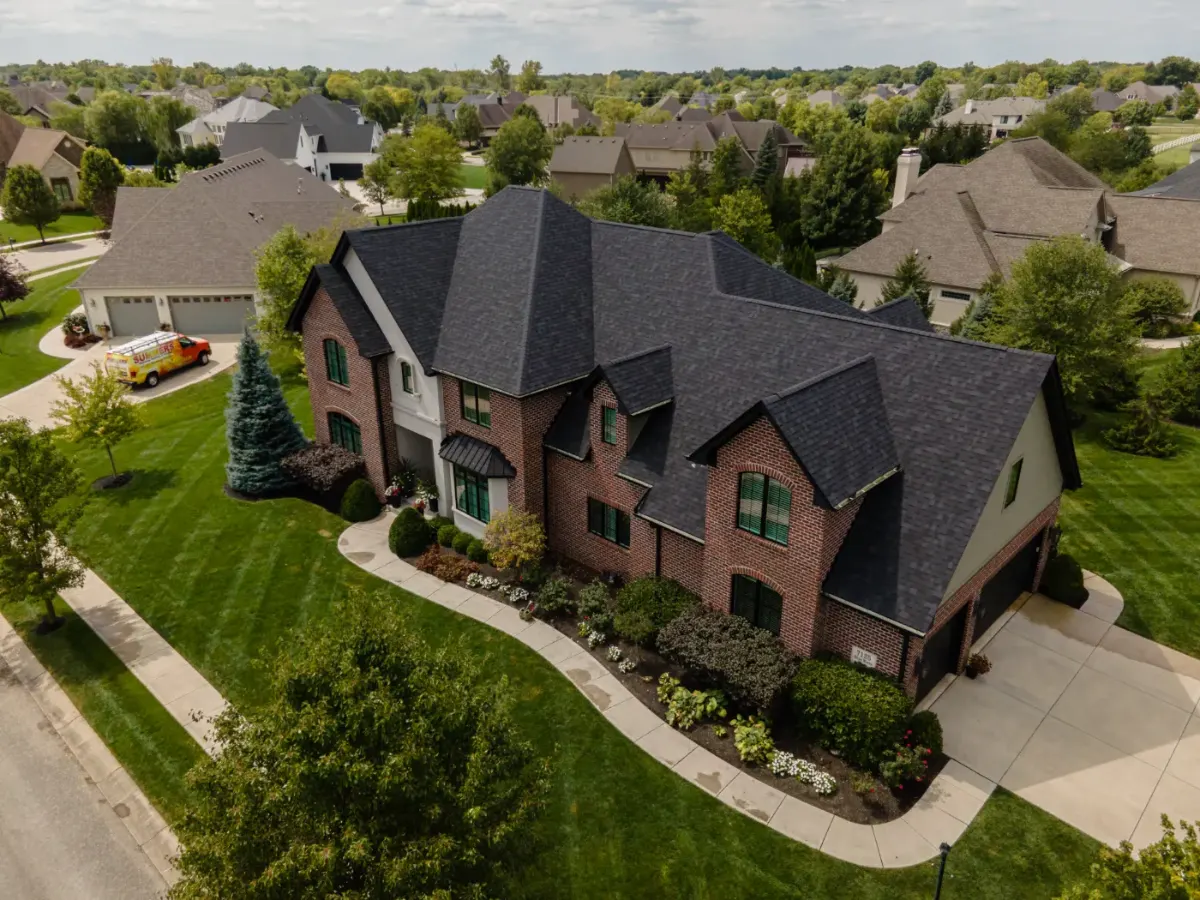
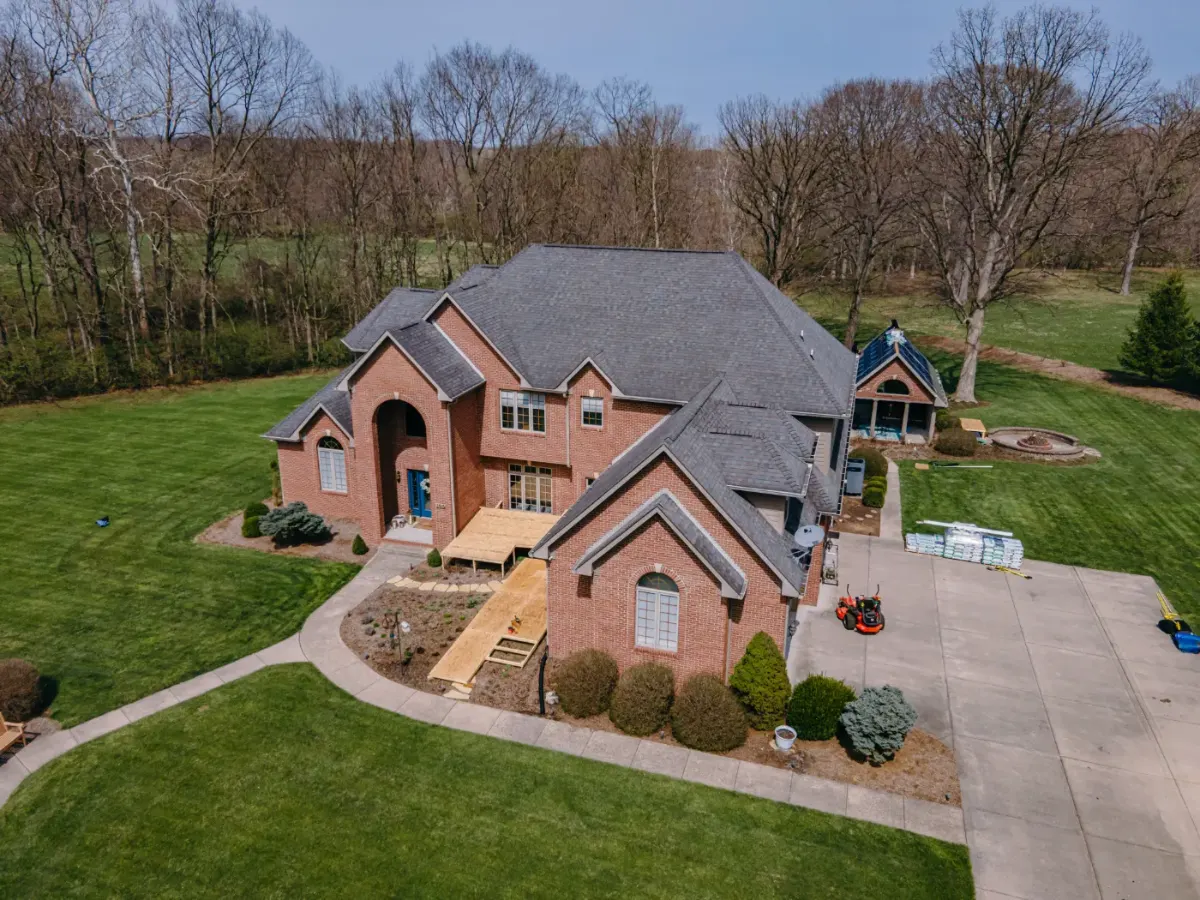
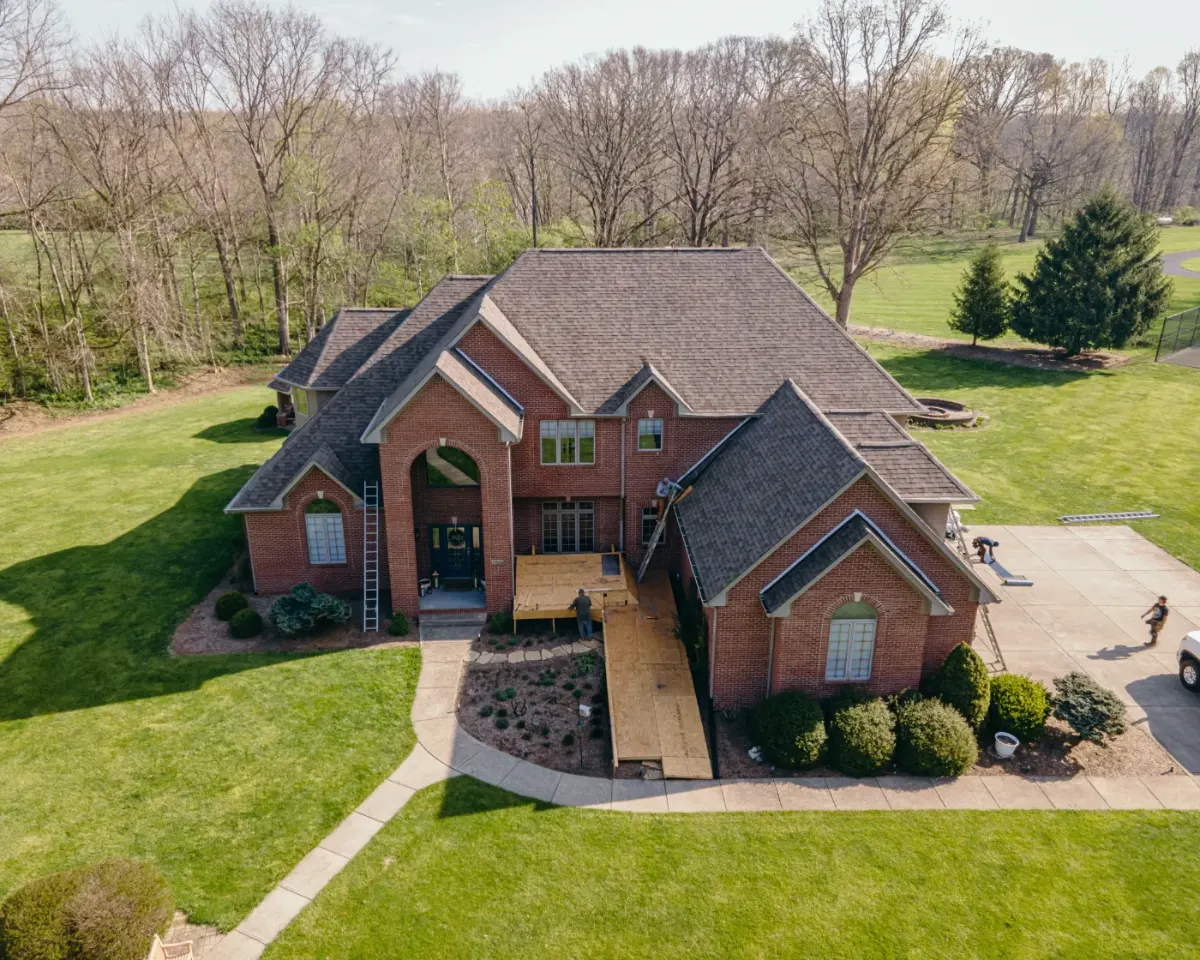
Recent Timber Bend roofing projects
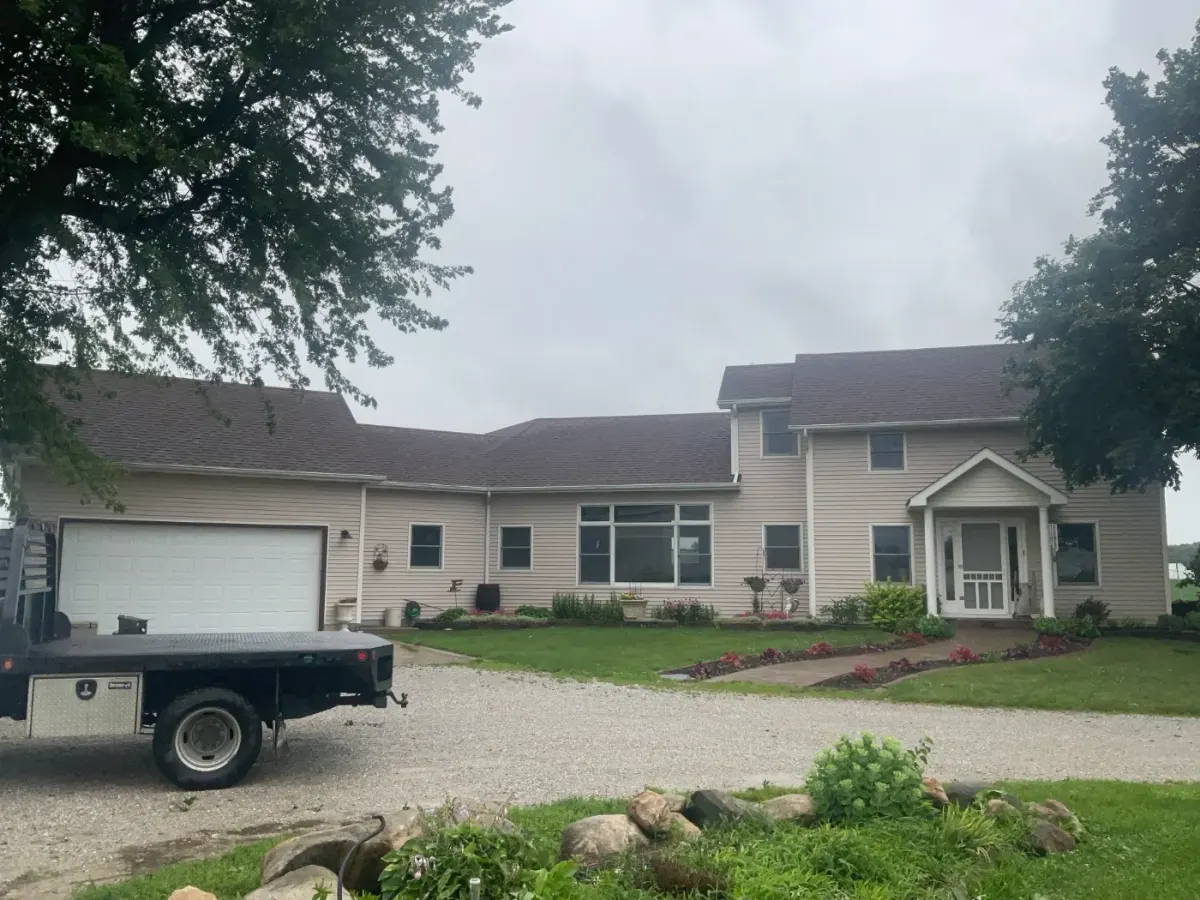
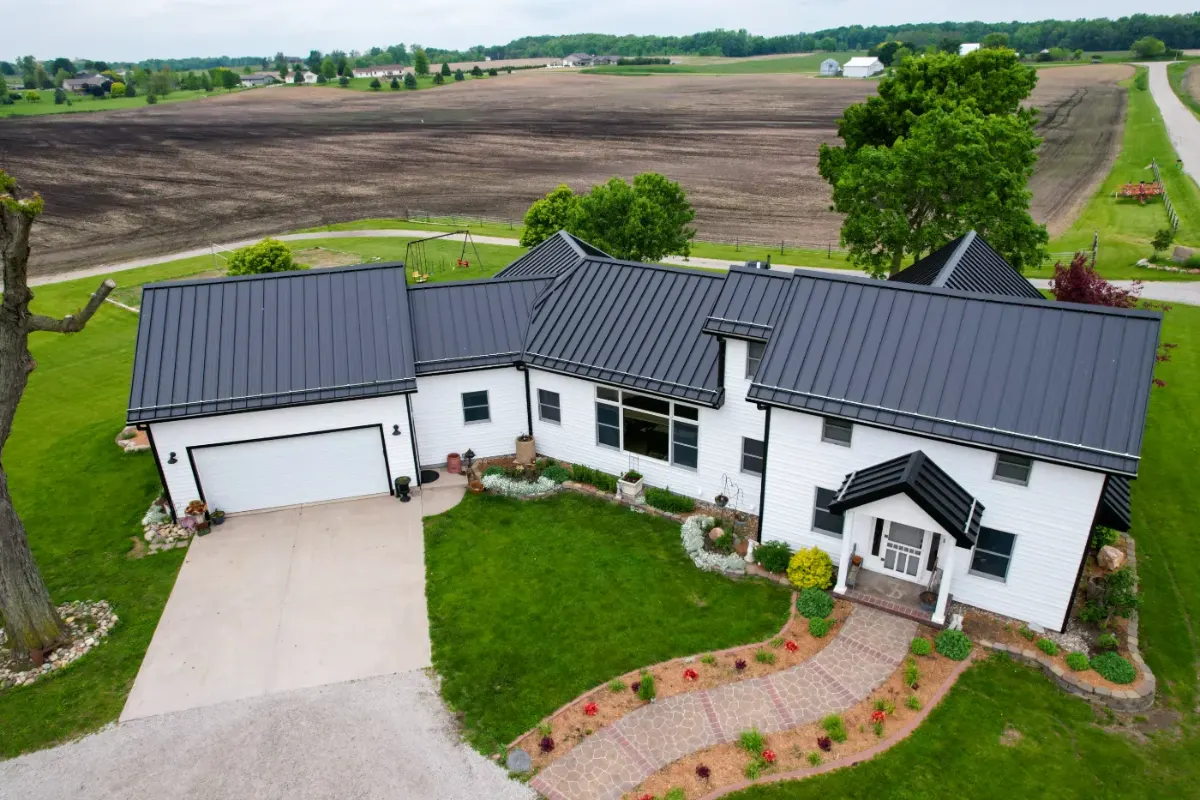
Before-and-after documentation from real Timber Bend projects. Same photo angles before and after the work.
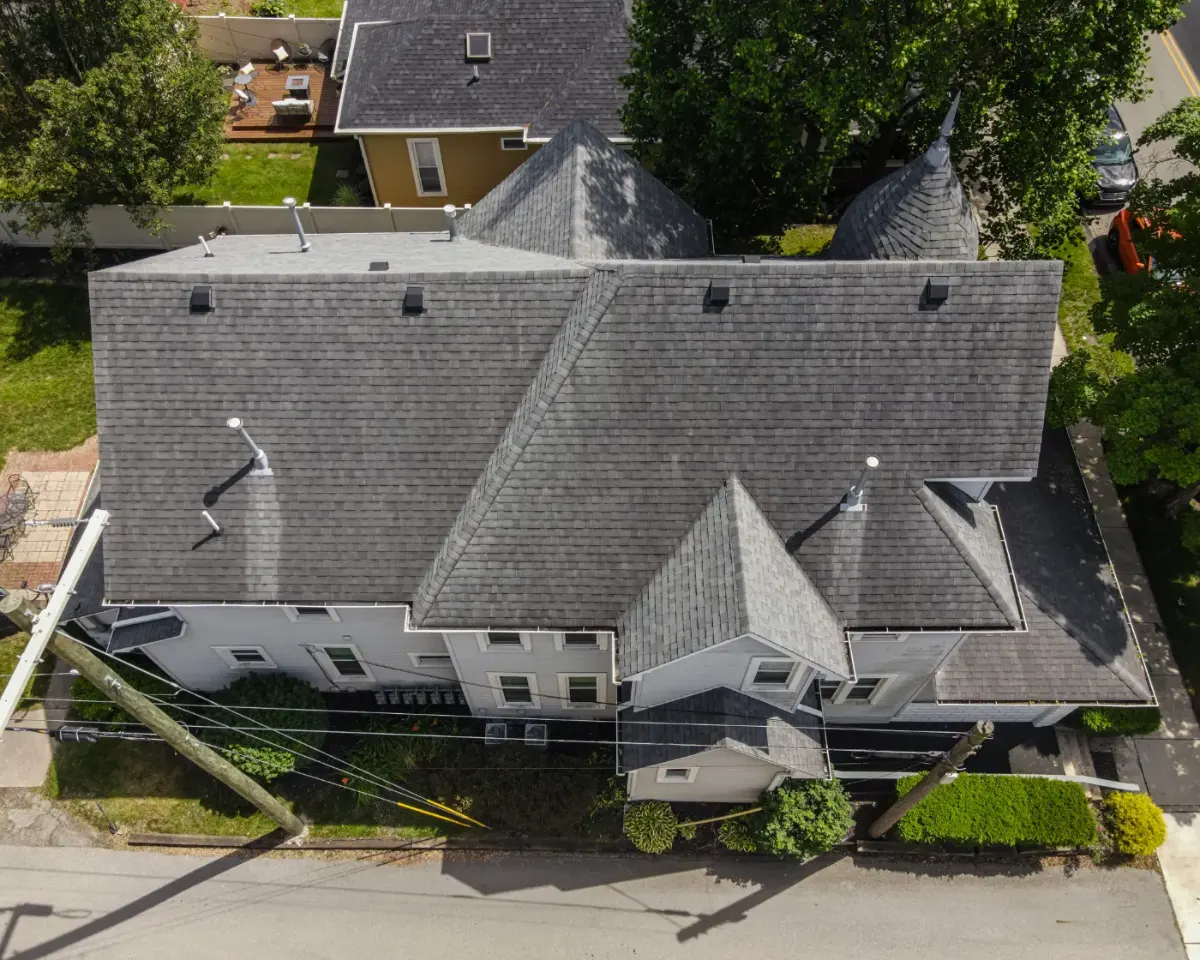
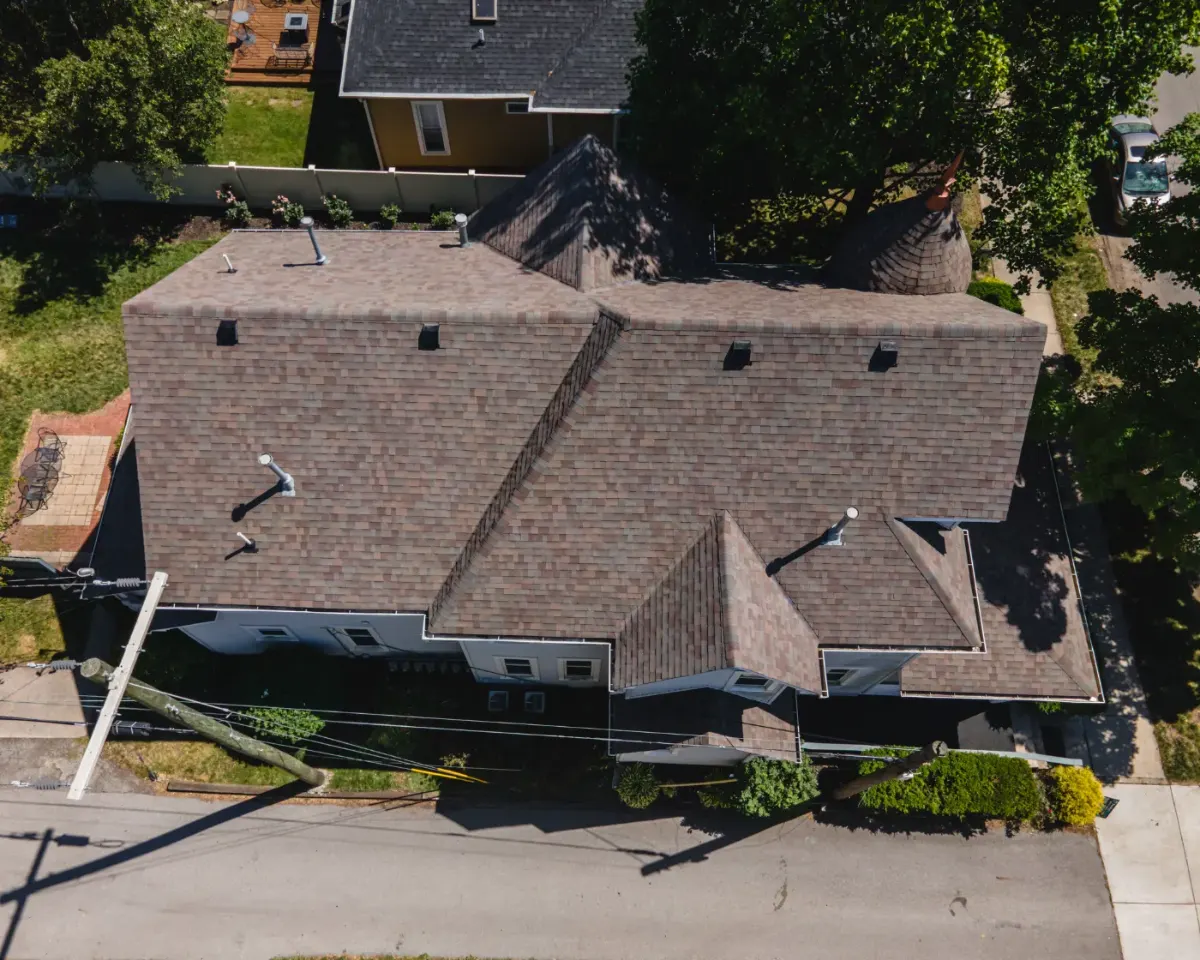
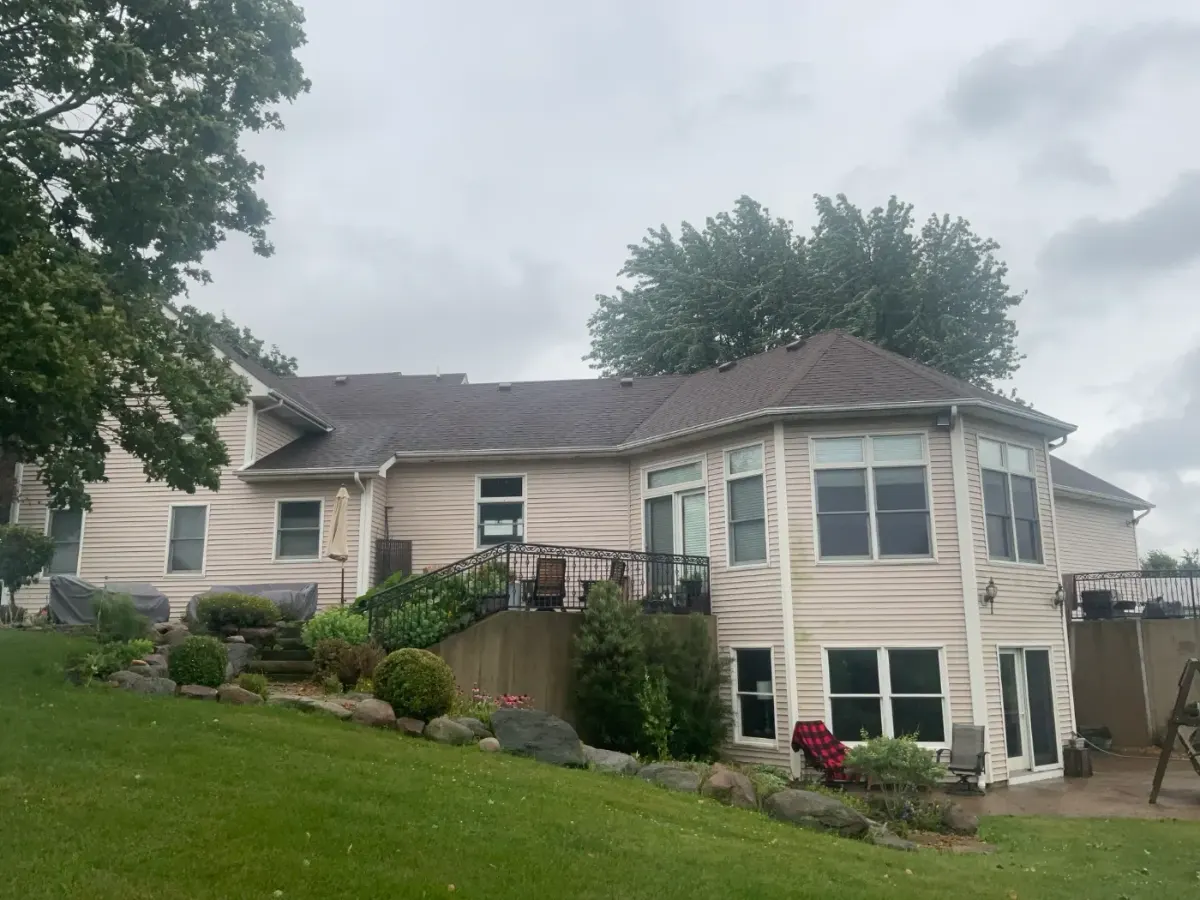
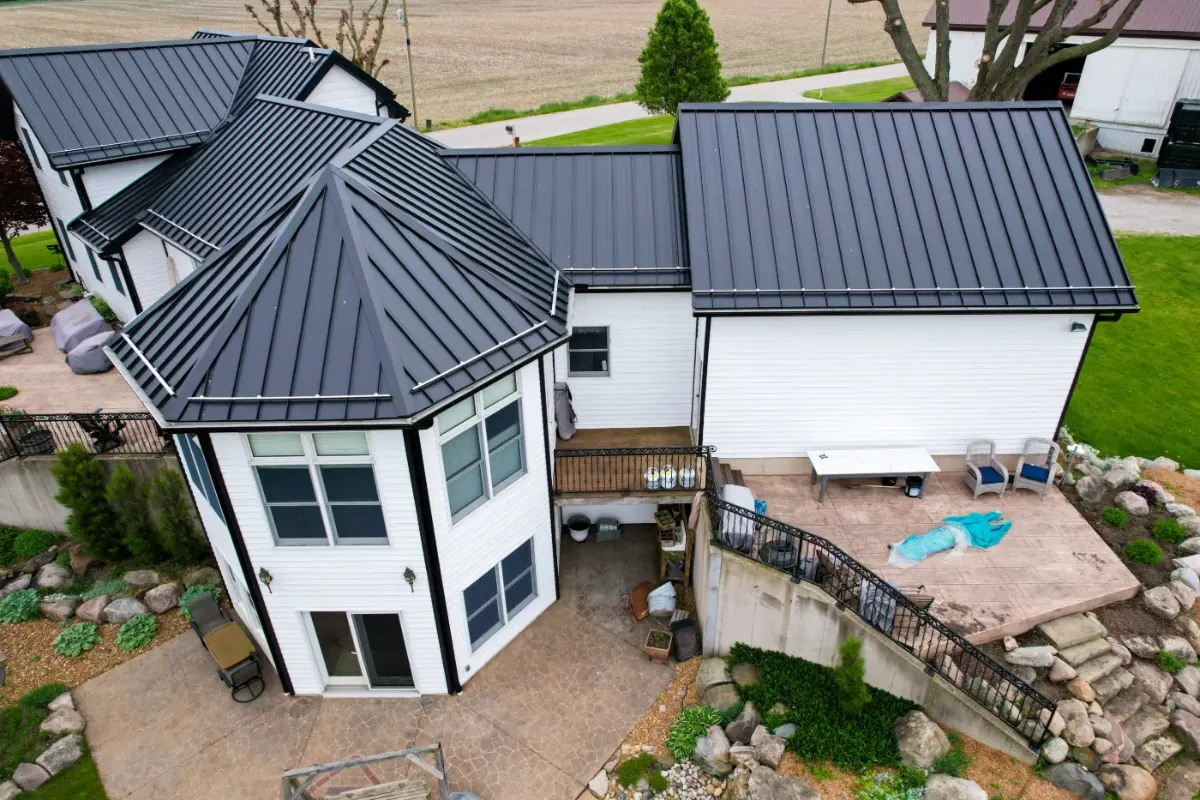
What we see most often on Timber Bend roofs
Timber Bend homeowners typically call us about these scenarios.
Roof Leaking After a Storm
Wind lifts shingle tabs and breaks seal strips, and the leak often shows up rooms away from the entry point as water tracks along decking and framing. Timber Bend storms produce exactly this call every spring. Timber Bend Roofing traces the actual entry point, documents wind damage to carrier standards, and repairs the field, not just the stain on the ceiling.
Hail Damage You Cannot See From the Ground
Hail bruises the shingle mat and knocks granules loose without leaving obvious holes, and that damage ages a roof years ahead of schedule. In Timber Bend hail claims, documentation quality decides the outcome. Timber Bend Roofing maps impacts slope by slope with photos and attends the adjuster meeting so covered damage gets counted, not argued away.
Gutters Pulling Away From the Fascia
When gutters sag in Timber Bend, the usual cause is not the gutter. It is fascia board that has softened because water has been running behind it. Timber Bend Roofing checks the fascia and the drip edge before quoting gutter work, because rehanging a gutter on rotten wood buys you one season.
Two Layers of Shingles on the Roof
A second layer laid over the first hides the decking, adds weight, and runs hotter than a single layer, which shortens both. Timber Bend homes that were reroofed this way in the past need a full tear off next time. Timber Bend Roofing tells you how many layers are up there during the free inspection so the number is not a surprise inside the quote.
Porch Roofs Too Flat for Shingles
Porch and addition roofs are usually shallower than the main slopes. A shingle roof sheds water downhill by overlapping; it does not hold water back, so wind-driven rain in a Timber Bend storm gets under the laps and shows up along the wall inside. Timber Bend Roofing tells you when the answer is a proper low-slope material instead of another course of shingles.
Step Flashing at Dormers and Sidewalls
A single strip of flashing tucked behind the siding is the shortcut version of a sidewall detail. From the driveway it looks fine, and behind the wall it holds water until the framing rots. The correct build uses individual L-shaped pieces woven into each shingle course, which is how Timber Bend Roofing rebuilds it, plus a kick-out at the bottom edge that drops runoff into the gutter.
Three Simple Steps
Same disciplined process on every job Timber Bend Roofing takes, starting with the free inspection and ending when the work is finished.
Free Inspection
You choose a time that suits you. From there we go over the roof, take photos of the conditions we find, and explain what they mean in practical terms.
Transparent Estimate
The outline is written down: what work we recommend and the benefit each item brings to your property. There's no pressure, and we take the time to walk through options comfortably.
Quality Installation
Crews who work attentively, follow consistent timelines, and respect your property. Manufacturer warranty registration handled in your name.
Timber Bend on Our Low Slope Sections
4.9 stars across 2,307+ Google reviews.
"Designer shingle install: Owens Corning Berkshire in a slate-look profile. The crew was meticulous about shadow alignment and the finished roof completely changed the look of the home. Manufacturer warranty in our name with all documentation delivered."
"Hail damage replacement after the spring storm. They worked directly with our insurance carrier, documented the damage thoroughly, and made the claim process simple. Replacement completed within three weeks of the storm."
"After two other contractors gave different diagnoses on the same leak, this crew traced it back to the actual source (ridge vent flashing, not the visible water stain area). Fixed it correctly the first time."
The Timber Bend Roofing FAQ
Straight answers to the questions Timber Bend homeowners ask most.
Indiana Weather Affects Roofs Year Round
Few states get weather as varied as Indiana. Over a year, Timber Bend homeowners see hail and hard thunderstorms in spring, UV beating down all summer, wind storms arriving in fall, and winter bringing freeze thaw cycles. We plan maintenance, repairs, and replacement work around those patterns.
Hail Bruising And Cracking
A confirmed quarter sized hail event hit Avon and Hendricks County on March 3, 2026, and Timber Bend sat right in that footprint. Hail that size bruises the mat under the shingle and cracks the surface, which shortens the roof's remaining life even if it looks fine from the ground. When we're called out, we check every plane for impact marks and document what we find with photos.
Wind Lifting And Tearing
The Avon, Plainfield, and Danville corridor sees recurring straight line wind events, and an April 2025 tornado outbreak brought EF-2 winds to nearby Brownsburg. Winds like that lift shingle tabs, break the sealant strip, and tear tabs off entirely along ridges and rakes. We look for creased shingles, missing tabs, and exposed nail heads, then scope the repair or replacement from there.
Ice Dams Under Shingles
Central Indiana winters bring freeze thaw cycles that build ice dams along eaves, especially on Timber Bend roofs with multiple planes and valleys where snow lingers. Water backs up behind the dam and works its way under the shingles, staining ceilings and rotting decking. We check for stained underlayment, damaged flashing, and inadequate ventilation when we inspect a roof after a hard winter.
Granule Loss On Aging Roofs
Timber Bend's mature tree canopy drops debris and holds moisture on roof surfaces, which speeds up granule loss on shingles that were already near the end of their service life. Once the granules go, the asphalt underneath bakes in the sun and fails fast. We check gutters and downspouts for granule buildup and grade the remaining life honestly during the inspection.
Choosing the Right Roof for Timber Bend Homes
An honest breakdown of the three systems we install most frequently.
Architectural asphalt shingles are the most common choice on Timber Bend roofs and for good reason. They balance cost, curb appeal, and dependable weather performance, and they come in a wide range of colors and profiles that fit the traditional and transitional styles common in the subdivision. Manufacturers back them with strong warranties, and installation is straightforward for our crews. On a Timber Bend home with multiple planes and valleys, architectural shingles lay clean and look right. If your original roof is a 3-tab or early architectural product from the late 90s, moving up to a modern architectural shingle is usually a meaningful upgrade in both appearance and expected life.
Impact resistant Class 4 shingles are built to take hail that would bruise or crack a standard asphalt shingle. Given the March 2026 quarter sized hail event in Hendricks County and the way spring storm seasons keep coming through the area, Class 4 shingles are worth a serious look for Timber Bend homeowners planning a replacement. They also tend to hold their granules longer under tree debris and weather. Ask your insurance carrier whether your policy offers a premium credit for a Class 4 roof, because some do and some don't, and we don't want to promise a discount that isn't yours to claim.
Standing seam metal is the longest lived of the three options, with concealed fasteners, a clean sightline, and the kind of service life measured in decades rather than years. It sheds snow and ice well, handles wind at ridges and rakes, and asks very little of you in ongoing upkeep. The tradeoff is honest, standing seam costs more upfront than architectural asphalt, sometimes considerably more. What you're buying is decades of low maintenance and a distinctive look. On the right Timber Bend home, especially larger custom builds with prominent roof planes, it can be the right long term call.
What Timber Bend Roofing Handles in Timber Bend
Roof Inspections
Late winter is a quiet time to have a roof looked at in Timber Bend, and it is usually the smartest one. Freeze and thaw work at the edges all season, lifting shingles and opening gaps around flashing that nobody notices until the first warm rain. Getting ahead of that keeps small fixes small.
Spring is busy for every roofer, so scheduling early tends to mean a faster visit and a calmer conversation. Wait until the storm calls start and you are standing in line behind everyone whose ceiling is already dripping.
Roof Inspections in Timber Bend ›Roof Repair
A repair visit begins with finding the actual source, which is rarely straight above the wet spot. Water travels along rafters and decking before it drops. So we work outward from the stain: nail pops, split boots around plumbing vents, lifted step flashing at a wall, a valley worn through, cracked sealant along the ridge.
We check the shingles surrounding the failure too, because a patch ringed by brittle field will fail again by spring. Then we say what has to be fixed and what can honestly wait on your Timber Bend home.
Roof Repair in Timber Bend ›Emergency Roof Repair
Some roof problems can wait for a scheduled visit and some cannot. If water is actively running into a Timber Bend home, if you can see daylight through the deck, if a limb has punched through, or if wind has peeled back a section of shingles, that is an emergency. Call rather than wait for morning.
Damage inside a house compounds by the hour once water finds a path. Drywall soaks, insulation packs down, and framing stays wet long after the rain stops. A cover over the opening tonight costs far less than the repairs a soaked ceiling turns into.
Emergency Roof Repair in Timber Bend ›Roof Replacement
The decision usually gets forced by something. A leak returns for the third time in one wet spring. An inspection during a home sale turns up an aging roof and the buyer wants it addressed.
A storm takes enough shingles that patching no longer makes sense. Or you look up from the driveway one afternoon and notice the roof looks tired next to everything else on the block. All of those are reasonable starting points, and none of them require you to decide anything on the day we visit your Timber Bend home.
Roof Replacement in Timber Bend ›Designer Roofing
Most of these conversations start with a house rather than a problem. Someone finishes a siding or window project and the old roof suddenly looks its age. A homeowner buys a place with strong architecture and wants the roof to match.
Sometimes a neighbor reroofs and the whole block starts noticing rooflines. Occasionally it begins with hail, when a claim covers replacement and the homeowner puts the difference toward a better shingle.
Any of those is a fine reason to ask what the options look like in Timber Bend. We are happy to talk it through before you commit to anything at all.
Designer Roofing in Timber Bend ›What Goes Into a Timber Bend Roofing Estimate
A written estimate should read like a description of the work instead of a single number with a signature line under it. Ours opens with the measurement.
Roofers price by the square, which is an area of one hundred square feet, and the total comes from measuring each plane, adding waste for the cuts a complicated roof demands, and noting the pitch of every slope. Everything downstream is built on that figure, which is why we'd rather measure a roof than guess at one from the driveway.
The next block covers what comes off and where it goes. Tear-off is priced by the layers being removed, since two coverings take longer to strip and fill more of a dumpster than one.
Disposal is its own item because the landfill charges by weight and an older roof with a second layer is heavy. Then the deck: a stated allowance for replacing bad boards or sheets at a set rate, plus refastening the existing sheathing where it has worked loose from the rafters over the decades.
After that comes everything that goes back on, in the order it gets installed. Underlayment across the field, membrane at the eaves and in the valleys where ice and concentrated water do their work, starter along the eaves and rakes, the shingles themselves, and hip and ridge material.
Flashing gets listed by location and never lumped together, so you can see that the chimney, the sidewalls and the plumbing collars were all actually accounted for. Ventilation sits on its own line with intake and exhaust separated.
The last section is the business end. Permit where the town requires one, the payment schedule, the expected duration, workmanship terms, and the conditions under which anything could change along with how you would be notified and asked to approve it.
Two estimates from honest companies can differ quite a bit in price and both be fair, but they should be recognizably describing the same house. If one of them is a single line and a number, there's nothing there to compare.
Freeze, Thaw and What It Costs You
The single hardest thing on a roof in this part of the state isn't the coldest night of the year or the hottest afternoon. It's the number of times the temperature crosses back and forth over freezing, which around here happens constantly from late fall through early spring.
Water gets into a small gap during the warm part of the day, expands when it locks up overnight, and makes the gap slightly bigger. Repeat that dozens of times a winter, over many winters, and small becomes structural.
You see the result in specific places. Nail heads that have worked their way up a fraction at a time until they push against the shingle above. Sealant joints around a chimney that were tight when they were installed and now show hairline cracks running the length of the bead.
Mortar in the chimney crown itself, which soaks up water and comes apart in flakes. The exposed edge of plank decking at the eaves, which swells and shrinks until the fasteners no longer have anything solid to hold.
Material matters here too. An older shingle that has lost most of its granules absorbs and releases moisture much more readily than a new one, so the freeze and thaw cycle accelerates its decline. That's why roofs in this region often look fine for many years and then seem to fall apart in the space of two or three seasons.
Nothing sudden happened. The material simply crossed the point where it stopped shedding water quickly, and the winters did the rest.
The practical response isn't complicated. Keep water moving off the roof and out of the gutters so it has less opportunity to sit and freeze, keep the attic cold and dry so the roof deck stays the same temperature as the air outside, and deal with cracked sealant and lifted fasteners while they are still small enough to be repairs. None of it is glamorous work, and all of it buys years.
How an Inspection Usually Ends
There are a handful of ways this goes, and the most common one surprises people. Quite often the roof is fine.
It has wear on it, the sun side looks older than the shaded side, and it's going to need replacing at some point, but not this year and not next. When that's what we find, that is what we tell you, and we'll put a rough sense of remaining life in writing along with what to watch for so you're not caught off guard later.
The next most common outcome is a repair. A split collar, a section of failed flashing at a wall, a valley that needs to come apart and be redone, or wind damage confined to one slope. Repairs get priced the same way replacements do, with the work described and the materials named, and we'll tell you honestly whether the repair is buying you a few good years or simply holding the line until you're ready for the bigger job.
When a full replacement really is the answer, we'd rather explain it than assert it. That usually means walking you through the photographs and pointing at the specific conditions driving the recommendation: the deck, the number of layers, the state of the fastening, the flashing that can't be reused, or a surface that has run out of granules. If a homeowner cannot see it in the pictures, we have not made the case.
Now and then an inspection ends without a clear answer, usually because a leak has not shown itself since the last hard rain. In that case we mark the suspect areas, make them watertight for the moment, and come back the next time the weather cooperates instead of replacing things on a hunch.
Whatever the answer, the paperwork looks the same and the pressure is the same, which is to say none. You get the findings, the photos, and a written scope for whichever path applies. What you do with all of it, and when, is entirely up to you.
What We Read From the Curb in Timber Bend
Plenty gets decided before the ladder ever comes off the truck. Standing at the end of the driveway, we sight down the ridge to see whether it runs straight or dips between rafters, then look across each plane for the waves that say a deck has taken on moisture.
Color tells us plenty as well. The slope facing the afternoon sun almost always looks older than the rest of the house, and a heavy wash of granules at the bottom of a downspout means the surface has been giving up its protection for a while.
Next comes a lap around the perimeter, which is where a surprising amount of the useful information lives. We check whether the gutters are pulling away from the fascia, whether the fascia itself has gone soft at the corners, and whether the soffit vents have been painted shut or packed full of insulation from the inside.
Ground conditions matter too. A spot along the foundation that stays wet long after everything else has dried out usually traces back to a roof or gutter problem instead of the grading.
On the roof we work slope by slope. Nail pops raise a shingle just enough to catch a fingernail as you pass a hand over it.
Seal strips that have released let tabs lift in wind that shouldn't be bothering them at all. We look hard at valley wear, at the rubber collars around plumbing stacks, and at the metal where the chimney comes through, since those pieces almost always fail well before the open field of the roof does.
The last stop is inside, up the attic ladder with a light. Pinholes of daylight at the deck seams, rust blooming on the underside of nail tips, and dark staining across the shaded slope all say the same thing in different ways.
We also follow the bath fans to see where they end up, because more of them than you would like dump warm wet air straight into the attic. By the time we come back down the picture is complete enough that we can tell you what your roof needs and, just as often, what it doesn't.
Get the Answers in Writing in Timber Bend
Every question worth asking is worth finding on paper afterward, because the conversation in your driveway isn't what governs the job. The estimate is. So after you have asked who is on the roof, look for the answer somewhere in the document, even if it only shows up as the name of the lead or a line saying the work will be performed by company crews instead of assigned out.
The deck answer should appear as an allowance, written as a rate per board or sheet with a quantity included and a clear statement of what happens beyond it. If a roofer tells you decking is included and the estimate says nothing about quantity, those two statements aren't the same, and the second one is what you'll be holding when the argument starts.
The same goes for the hidden damage conversation. It should exist as a paragraph describing how you get notified, how you approve, and that no additional work happens before you do.
Warranty terms need to be attached to the paperwork, and having them described out loud isn't the same thing. Ask for the workmanship terms as an actual document with the length, the exclusions, and the transfer provisions spelled out, and ask which material coverage applies to the system being installed. Verbal warranty length is worth nothing at all, and the difference between what people remember being told and what the paper says is where most of the bad stories start.
Cleanup, permits, payment timing and the daily schedule belong there too. It does not have to be a long document. A single page can cover the whole of it if the person writing it has done this enough times to know where the trouble comes from.
What you're really testing when you ask for things in writing is not the answer itself. It's whether the company is comfortable being held to what they told you, which is the only part of any of this you can rely on later.
More Timber Bend Questions, Answered Plainly
A Look at Our Timber Bend Coverage
These are roofing jobs we've finished in neighborhoods around Timber Bend and nearby. Pick one to see what we picked up working on those streets.
Where we respond near Timber Bend
Indiana-licensed crews dispatched to Timber Bend and the closest surrounding communities.
Roofing Systems Compared in Timber Bend
The four residential systems we most often install are listed here, with pricing based on typical installations in Timber Bend.
Typical pricing in Timber Bend as of 2026 is what these ranges show. Upper numbers marked with a plus sign can go higher for your project, depending on inspection findings. There's no charge for a written scope and quote.
Timber Bend Roofing is powered by Indy Roof & Restoration
When you call, Indy Roof & Restoration answers. When work starts, their crew shows up. When it is done, their warranty holds. Serving central Indiana since 2018 means Indy Roof & Restoration has seen what Timber Bend weather does over full decades, not one season. Homeowners have left 2,307+ verified Google reviews averaging 4.9 stars, which puts Indy Roof & Restoration among the highest rated contractors in the area.
Licensed and insured · License #RC21100059
That work is backed by Owens Corning Preferred Contractor, Malarkey Certified Contractor, BBB A+ Accredited and Google Google Guaranteed. Local media including FOX59, WISH TV, and RTV6 have covered their work.
Expert Timber Bend Roofing Crews Available Now
Whether a recent storm hit your Timber Bend roof, the shingles are showing their age, or you're just planning ahead for replacement, it's worth having someone climb up and take a real look. Schedule a free inspection with Timber Bend Roofing, no obligation, and we'll document everything you need for a possible claim.